· 5 min read
How to care for knitwear so it lasts
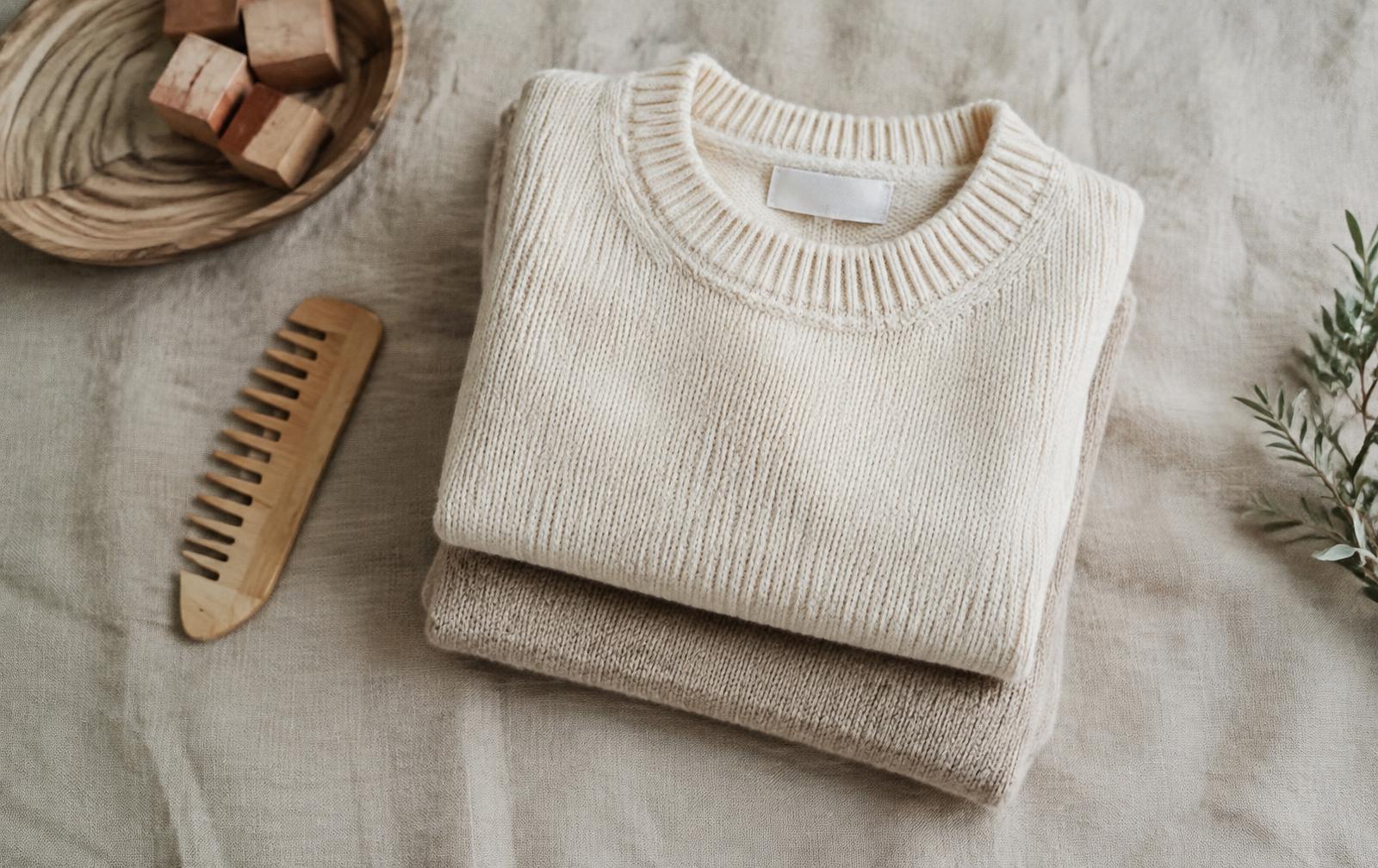
The short answer: wash knitwear less often than you think, use cool water and a gentle detergent, press the water out instead of wringing, dry it flat and store it folded. Do those five things and most jumpers, whether they are wool blends, viscose or acrylic mixes, will keep their shape and softness for years rather than weeks.
Always check the care label first. It is the only reliable guide to what a particular yarn can handle, and the advice below assumes you follow it.
How often should you wash a jumper?
Far less often than a T-shirt. Knitwear worn over another layer rarely needs washing after every wear. Airing it overnight on the back of a chair is usually enough to refresh it. A good rule is to wash after five or six wears, or sooner if it is marked or has been worn next to the skin all day.
Every wash puts stress on the fibres, so washing less is the single biggest thing you can do to make knitwear last.
Hand wash or machine?
If the label allows a machine wash, use the wool or delicates cycle at 30 degrees or below, turn the jumper inside out and put it in a mesh laundry bag. A low spin speed helps prevent stretching.
To hand wash, fill a basin with cool water and a small amount of wool or delicates detergent. Submerge the jumper, squeeze the suds through it gently for a minute or two, then rinse in clean water of the same temperature. Sudden changes in temperature and rubbing are what cause felting and shrinking.
How to dry knitwear without stretching it
Never wring a jumper. Press the water out against the side of the basin, then lay it on a clean towel, roll the towel up and press firmly. Unroll it and lay the jumper flat on a dry towel or drying rack, easing it back into shape with your hands.
Keep it away from radiators and direct sunlight, and skip the tumble dryer unless the label specifically says it is safe. Hanging a wet jumper is the quickest way to stretch the shoulders and lengthen the body.
Dealing with bobbles
Pilling happens to almost every knit, especially blends, where friction rubs short fibres to the surface. It is not a sign of a fault. Remove bobbles with a fabric comb or an electric de-piller, working gently in one direction on a flat surface. Do it occasionally rather than constantly, as each pass removes a little of the surface.
You can reduce pilling by washing inside out and avoiding wearing a jumper under a bag strap that rubs in the same place every day.
Storing knitwear
Fold, do not hang. Hangers leave bumps in the shoulders and gravity slowly pulls the body longer. Fold jumpers and stack them on a shelf or in a drawer, with the heaviest at the bottom.
For summer, wash everything before you put it away, because moths are drawn to body oils and food marks. Store knitwear in breathable cotton bags or a lidded box, and add cedar blocks or lavender sachets as a deterrent.
A quick routine to remember
Air between wears. Wash cool and gentle every five or six wears. Press, never wring. Dry flat, away from heat. Comb off bobbles now and then. Fold to store. It takes a few extra minutes, and it is the difference between a jumper that lasts one season and one you are still reaching for in three.