· 5 min read
Trench coat or wool coat: which do you need?
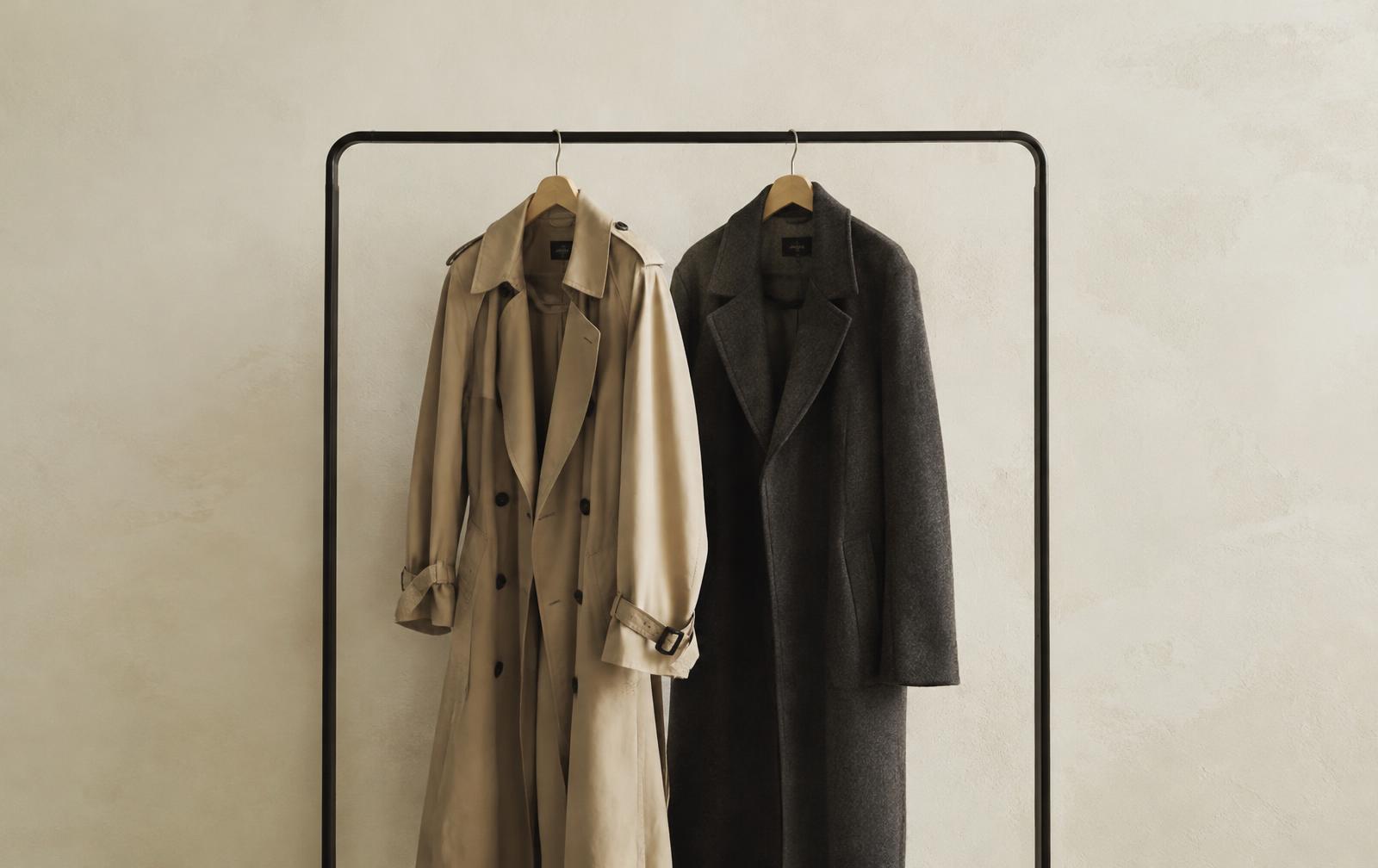
If you can only buy one, choose based on when you feel cold. A trench coat is a lightweight, usually water-resistant layer that works best in mild, damp weather, roughly 10 to 18 degrees. A wool-blend coat is warmer and heavier, made for the genuinely cold months when temperatures drop into single figures. In the UK, most people end up wanting both, because the trench covers spring and early autumn while the wool coat handles winter.
When a trench coat makes sense
A trench is built for changeable weather. Its tightly woven outer fabric, traditionally cotton gabardine, sheds light rain, and the belt and storm flap help keep wind out. Because it has little insulation of its own, you control the warmth by what you wear underneath: a T-shirt in May, a fine knit in October.
It is also the more versatile shape for travel and commuting. It packs down reasonably well, looks smart over tailoring and relaxed over jeans, and does not overwhelm a smaller frame.
When you need a wool-blend coat
Once it is cold enough to see your breath, a trench and a jumper stop being enough. Wool-blend coats trap air in the fibres and the denser weave blocks wind, so they keep you warm with fewer layers underneath.
Check the label: the percentage of wool affects warmth, weight and how the fabric feels, and blends with polyester or viscose are lighter and easier to care for. Look for a lined coat with enough room across the back to wear a chunky knit beneath it.
Which length and shape?
For a trench, a length that finishes at or just below the knee is the most adaptable. It covers a blazer and works with both trousers and midi skirts. Belted styles give shape; worn open with the belt tied behind, they look more relaxed.
For a wool coat, a longline, slightly oversized cut is the easiest to wear over winter layers. Mid-calf lengths feel elegant with wide-leg trousers and boots; a hip or thigh length coat is more practical if you drive or cycle.
Colour: start neutral
Classic trench coats come in stone and beige for a reason: they work with almost everything and brighten a grey day. For a wool coat, camel, charcoal and black are the most adaptable. Choose the one that sits best with the shoes and bags you already own, so the coat works with your wardrobe from day one.
The short version
Choose a trench if you want one coat for spring, early autumn and drizzly commutes. Choose a wool-blend coat if your priority is staying warm from November to February. If you want to cover the whole year in the UK, own one of each, and buy the one for the season you are about to enter first.